

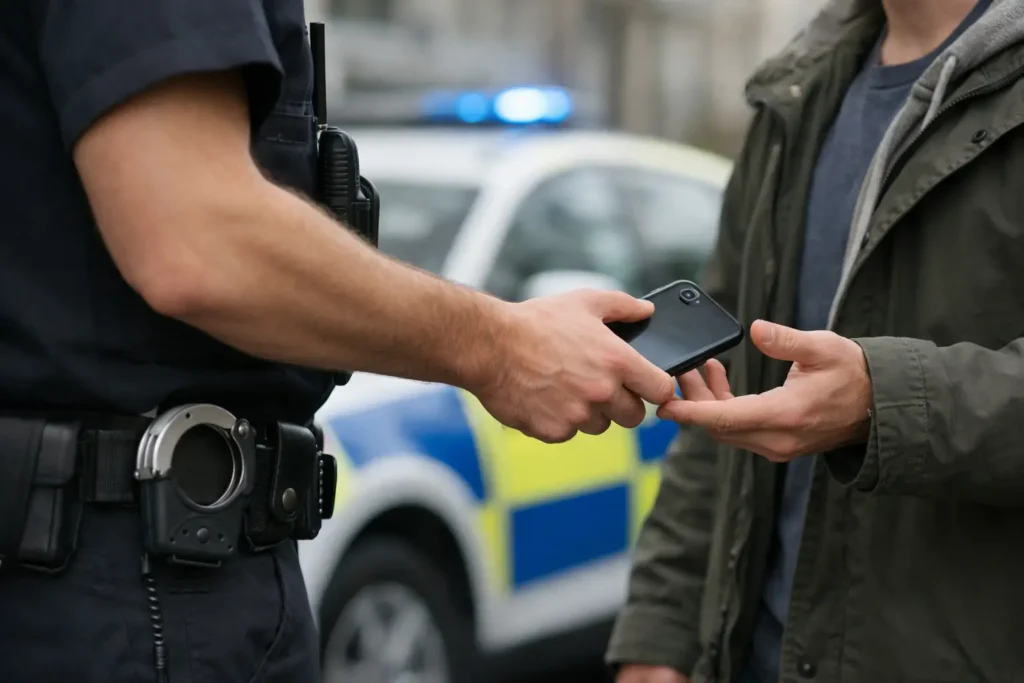
A phone can hold far more than messages. It may contain location history, photographs, banking alerts, health information, work communications and private conversations with the people closest to you. If officers ask for it during a stop, arrest or interview, the immediate question is often: can police seize your phone?
In the UK, police can seize a mobile phone in certain circumstances, but taking the device does not give them unrestricted permission to examine everything on it. The law distinguishes between seizure, retention and searching the data stored on a device. Knowing that distinction can help you protect your rights without obstructing the police.
When can police seize your phone?
Police powers depend on the situation they are dealing with and the legal authority they are using. In broad terms, officers may seize a phone where they reasonably believe it contains evidence relating to an offence, has been obtained through an offence, or is needed to prevent evidence being concealed, lost, altered or destroyed.
This may happen following an arrest, during a search of a person or premises, or when officers are acting under a warrant. For example, if you are arrested on suspicion of an assault and police believe messages, videos or call records may be relevant, they may take your phone into possession. Equally, a phone may be seized during an investigation into allegations involving drugs, fraud, harassment, driving offences or public order matters.
The key point is that officers should be able to identify a lawful basis for taking the device. They cannot simply seize property because it is convenient or because they are curious about its contents.
Seizure is not the same as a full phone search
A phone may be taken away quickly, particularly after an arrest, to preserve potential evidence. Downloading or examining the contents is a separate and more intrusive step. Police should consider whether searching the device is necessary and proportionate to the investigation.
That matters because modern phones contain an exceptionally broad record of a person’s private life. An investigation into one alleged incident does not automatically justify an unlimited search through years of personal material. The scope of any examination should relate to the issues being investigated.
Can police seize your phone during a stop and search?
A stop and search does not create a general right for police to take and inspect your phone. Officers need a specific power and reasonable grounds for the search they are conducting. If they find a phone, they may seize it where there is a proper legal basis to believe it is connected to an offence or may be evidence.
For instance, a phone might be seized if it appears to be stolen, if it is believed to contain evidence of suspected drug supply, or if it is relevant to another offence for which police have lawful grounds to search. Simply possessing a phone during a stop and search is plainly not enough.
Stay calm, ask which power is being used and request the officer’s details. Do not physically resist seizure, as this may lead to further allegations. You can challenge the lawfulness and necessity of the action later with legal advice.
What happens if your phone is taken after arrest?
At the police station, your phone will usually be recorded as property and retained securely. You should be told that it has been taken, and property records should identify the item. If police intend to extract data, specialist digital forensic processes may be used, although delays are common.
The device may be retained while investigators decide whether it contains relevant evidence, while forensic work is completed, or until criminal proceedings have ended. This can be highly disruptive where the phone is needed for work, family arrangements, banking security or access to two-factor authentication.
A solicitor can ask the police to explain why the device remains necessary, whether a more limited examination can be carried out, and when it is likely to be returned. In some cases, it may be possible to seek return of a device or request practical arrangements where its continued retention is no longer justified.
Do you have to give police your PIN or password?
You should not assume that police can demand your PIN, password or passcode in every situation. They may ask you to provide it, but a request is not always a legal requirement.
There are circumstances in which a formal notice can require a person to disclose an encryption key or provide access to protected information. Such notices are subject to specific legal rules and can carry serious consequences if ignored. Whether a notice is valid, what it requires and whether you have a defence are matters on which you should obtain urgent legal advice.
Do not guess, lie or destroy information. If you are being pressed to provide access to your phone, say clearly that you want to speak to a solicitor before answering. If you are under arrest, ask for the duty solicitor or your own criminal defence solicitor. Legal advice at the police station is free, and obtaining it does not make you look guilty.
Can police search all your messages and photos?
Not necessarily. Police must act lawfully and proportionately when handling digital material. A device can contain information concerning not only the suspect, but also partners, children, colleagues, clients and other people with no involvement in an investigation.
Officers should not carry out an indiscriminate trawl through a phone simply because it has been seized. The type of allegation, the suspected timeframe, the people involved and the material genuinely sought should all influence the scope of any search.
There are practical limits too. A forensic download may capture more material than is ultimately relevant, but investigators must have processes for identifying and reviewing material properly. If the prosecution later relies on messages, images, location data or app records, your legal team can examine how that evidence was obtained and whether it has been interpreted fairly.
Your rights if police take your phone
You do not need to argue the law at the roadside or in a custody suite. Your priority should be to remain calm, protect your position and get advice early. You can ask why your phone is being seized, request a property receipt and ask when it may be returned.
If you are arrested, exercise your right to free and independent legal advice before answering questions. This is especially important where police suggest that phone evidence proves an allegation. Digital evidence can be incomplete, taken out of context or attributed to the wrong person. A message sent from a device is not always proof of who wrote it, what was meant, or what happened in reality.
You should also avoid contacting potential witnesses, deleting material, resetting the phone or asking someone else to access accounts on your behalf. Even if you feel the investigation is unfair, these actions can create additional and avoidable difficulties.
When to speak to a criminal defence solicitor
Get legal advice immediately if police have seized your phone and you have been arrested, invited to a voluntary interview, served with a notice requiring access to data, or told that material on the device will be used against you. Early representation allows your solicitor to advise you before an interview, challenge inappropriate questioning and assess whether police powers have been used correctly.
At Cooper Hall Solicitors, our criminal defence team provides clear, decisive advice when an investigation places your liberty, reputation or livelihood at risk. We focus on protecting your rights from the first police contact and building the strongest available response to the allegations.
Your phone may be central to the investigation, but it does not remove your right to fair treatment. Ask for legal advice early, keep a record of what has been taken, and let an experienced solicitor take control of the legal issues while you focus on what comes next.