

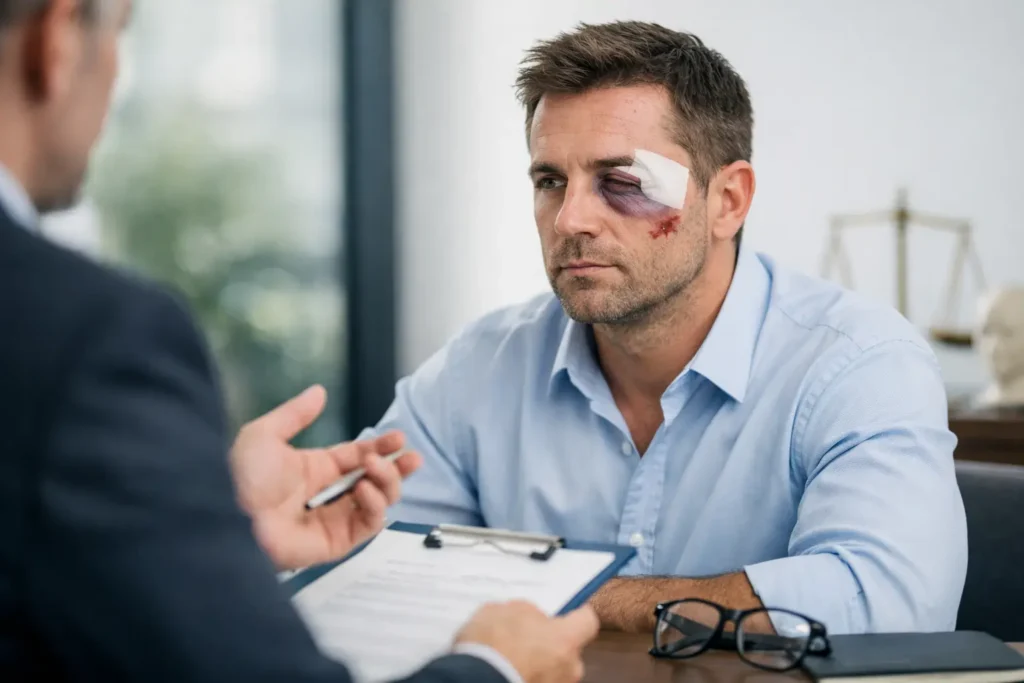
A facial injury can change far more than your appearance. It may affect how you eat, speak, breathe, sleep or see, while leaving you anxious about scarring, future treatment and returning to work. If someone else was responsible, facial injury compensation can provide vital financial support and recognise the real impact the injury has had on your life.
The value of a claim depends on the medical evidence, the seriousness of the injury and its lasting effects. No two cases are identical. A fracture that heals without complications will be assessed differently from an injury that leaves visible scarring, nerve damage or psychological trauma.
When can you claim facial injury compensation?
You may be able to bring a personal injury claim where your facial injury was caused by another person or organisation failing in their duty of care. This may arise after a road traffic collision, an accident at work, a fall in a public place, an assault, or medical treatment that fell below an acceptable standard.
Liability is not always straightforward. For example, an employer may argue that safety equipment was available, a local authority may dispute responsibility for a defective pavement, or an insurer may suggest that you were partly at fault for a collision. This does not necessarily prevent a claim. Where responsibility is shared, compensation can sometimes still be recovered, although it may be reduced to reflect your contribution to the accident.
In assault cases, a civil claim against the attacker may be possible if they can be identified and have the means to pay. Where this is not realistic, compensation may instead be available through the Criminal Injuries Compensation Authority. The applicable rules, evidence requirements and time limits can differ, so early legal advice is particularly valuable.
Injuries that may support a claim
Facial injuries range from short-term soft tissue damage to life-changing trauma. The visible nature of an injury often matters, but the legal assessment goes beyond appearance alone. It considers pain, treatment, recovery, practical limitations and the way the injury affects your confidence and daily life.
Claims may involve facial fractures, including broken noses, cheekbones, eye sockets or jaws. They can also involve dental damage, loss of teeth, burns, lacerations, permanent scarring, nerve injury, damage to the eyes or ears, and injuries affecting smell or taste. In more serious cases, a claimant may require reconstructive surgery, repeated dental work or long-term support.
Psychological harm can be just as significant. Someone who has developed anxiety, depression, post-traumatic stress disorder or a fear of being seen in public after facial trauma may be able to seek compensation for that injury too, provided it is supported by appropriate medical evidence.
Scarring and disfigurement
Scarring is assessed carefully because its impact is personal as well as physical. A scar may fade considerably over time, or it may remain prominent and cause lasting distress. Its location, size, colour and whether it can be concealed may all be relevant. The court will also consider the age of the injured person and the effect the scarring has had on their social life, relationships and employment.
Photographs taken throughout recovery can be useful evidence. They should not replace medical records, but they can show changes that a single examination months later may not fully capture.
What does facial injury compensation cover?
A successful claim is usually made up of two broad parts. The first is compensation for the injury itself, including pain, suffering and loss of amenity. This reflects the physical and emotional consequences of the facial injury.
The second is compensation for financial losses and expenses caused by the accident. These losses can be substantial, especially where treatment is ongoing or the injury affects a person’s ability to work.
Depending on the circumstances, a claim may include lost earnings, reduced future earning capacity, private treatment costs, prescription charges, dental care, cosmetic or reconstructive surgery, travel to appointments and the cost of care provided by family members. You may also be able to recover the cost of specialist aids, counselling, or help with household tasks during your recovery.
Keep receipts, appointment letters, wage slips and details of any help you have needed. Small expenses can build up, and evidence of each loss gives your solicitor the strongest basis for including it in the claim.
Evidence that can strengthen your claim
The most persuasive claims are built early and supported properly. Your medical records will be central, but they are only one part of the picture. An independent medical expert will usually examine you and prepare a report on the injury, treatment received, likely recovery and any permanent symptoms.
Evidence of how the accident happened is also essential. This may include accident reports, CCTV footage, photographs of the location or vehicle damage, witness details and correspondence with an employer, insurer or public authority. If the incident occurred at work, report it promptly and ensure it is recorded in the accident book where one is kept.
Where scarring, dental injury or psychological harm is involved, specialist evidence may be needed. A solicitor can identify which reports are necessary and make sure the claim accounts for likely future treatment rather than accepting an early offer that fails to meet your long-term needs.
How long do you have to make a claim?
For most personal injury claims in England and Wales, court proceedings must be started within three years of the accident date. If the injury was not immediately apparent, time may run from the date you first had knowledge that it was significant and linked to the incident.
There are important exceptions. Children normally have until their 21st birthday to begin a claim, as the three-year period usually starts when they turn 18. Different arrangements may apply where a person lacks mental capacity. Criminal injury compensation claims also have their own deadlines, which can be shorter in practice.
Although three years may sound like plenty of time, delay can make evidence harder to obtain. CCTV may be deleted, witnesses may become difficult to trace and records can be lost. Taking advice as soon as possible protects your position and allows the right evidence to be secured.
Why early settlement offers need careful consideration
After an accident, an insurer may contact you with an offer before you understand the full medical picture. A quick payment can seem attractive when you are unable to work or facing unexpected bills. However, accepting a settlement normally ends the claim permanently.
This creates a real risk where further surgery, dental treatment or permanent scarring is possible. The right decision depends on your circumstances, but it is sensible to obtain independent advice before accepting any offer. A properly assessed claim should account not only for your condition today, but for credible future losses and treatment needs.
Getting the right support after a facial injury
A facial injury claim should never be treated as a standard form exercise. The evidence must show the full effect of the injury, from physical pain and visible scarring to work disruption, treatment needs and loss of confidence. Clear legal advice can help you understand whether you have a claim, what evidence is needed and what a fair outcome should reflect.
Cooper Hall Solicitors can provide practical, client-focused guidance from the earliest stage of a claim, helping you protect your rights while you focus on your recovery. The sooner you seek advice, the sooner you can take control of the next steps.