
Arrested, under investigation or at the police station? Call 07494 299377, 24 hours.
A roadside stop can become a criminal investigation very quickly. A failed screening test, an evidential breath reading at the police station and a charge may all follow within hours. A breathalyser evidence challenge is not about looking for a technicality where none exists. It is about checking whether the police obtained, recorded and can rely on the evidence lawfully. Our criminal solicitors can advise at the police station, before interview and after charge.
For people in Bradford, Blackburn and across England, early advice can make a material difference to what is preserved and what is said. A police station representation solicitor can scrutinise the procedure, seek disclosure and protect your position while the facts are still clear.
What evidence is used in a drink-driving case?
Police may use a preliminary breath test at the roadside when they have lawful grounds to require it (Road Traffic Act 1988, section 6). That test can justify further action, but the evidential sample normally taken at the police station is central to an allegation of driving or attempting to drive with excess alcohol.
Section 7 of the Road Traffic Act 1988 governs requirements to provide specimens for analysis in relevant circumstances. In many cases, the police will ask for two breath specimens on an approved evidential device. Where two breath specimens are provided, the one with the lower proportion of alcohol is used and the other is disregarded (Road Traffic Act 1988, section 8). In England, the prescribed breath limit is 35 microgrammes of alcohol in 100 millilitres of breath (Road Traffic Act 1988, section 11).
The Road Traffic Offenders Act 1988, section 15, sets out rules on proving the result of breath analysis in court. That does not mean a printout automatically decides the case. The prosecution must still prove the offence beyond reasonable doubt, and the surrounding evidence may matter.
The CPS Legal Guidance on Drink Driving and GOV.UK guidance on drink-drive limits are useful official sources on the offences, limits and consequences. They also underline why it is risky to make assumptions based only on what happened at the roadside.
When can breathalyser evidence be challenged?
A successful challenge depends on the facts, the records and the law. A person may genuinely believe the machine was wrong, but the court will need evidence that supports that concern. Equally, an apparently routine procedure may reveal a significant issue when the custody record, device printout or officer’s account is examined closely.
The legal basis for the requirement
Police powers are not unlimited. A solicitor may consider whether there were lawful grounds for the initial requirement, whether the correct statutory procedure was followed and whether the person was properly informed of what was required.
This is fact-specific. A defect at the roadside will not necessarily prevent later evidential results being used. However, the full sequence of events should be reviewed rather than treating each stage in isolation.
The device and testing procedure
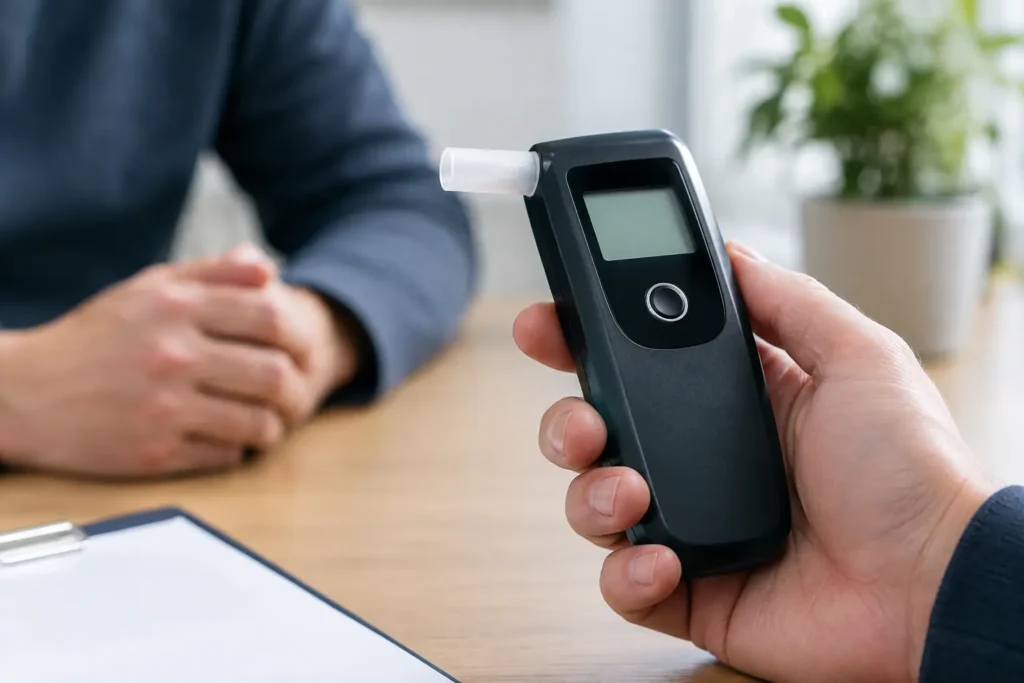
Evidential breath testing involves approved equipment and prescribed procedures. Questions can arise about the device used, the test sequence, the readings produced, instructions given to the driver and the documentation created at the station.
A challenge may also examine whether there was a proper period of observation before testing. The purpose is to reduce the risk of residual alcohol in the mouth affecting a reading. This is not a guaranteed defence simply because someone had recently used mouthwash, vomited or eaten. The relevant question is what happened, what officers observed and whether it could realistically affect the evidential result.
Medical issues and inability to provide a specimen
Some people have respiratory conditions, injuries or other health problems that make providing a breath specimen difficult. That must be raised immediately and clearly. Section 7 of the Road Traffic Act 1988 provides for alternatives in certain circumstances, including blood or urine specimens where a breath specimen cannot or should not be provided.
A medical condition does not automatically invalidate a breath result or justify refusing to provide a specimen. Refusal or failure to provide without a reasonable excuse can itself be an offence under section 7(6) of the Road Traffic Act 1988. If you are struggling, explain why, ask for the issue to be recorded and obtain legal advice as soon as possible.
Disclosure and the reliability of the record
The prosecution may hold material beyond the final reading, including the custody record, officers’ notes, video footage, printouts, call logs and documents concerning the machine’s use. A defence representative can seek and assess relevant material.
Minor paperwork errors will not always undermine a prosecution. Courts focus on whether an error is meaningful and whether it affects the reliability or fairness of the evidence. That is why a breathalyser evidence challenge needs a careful review, not a standard list of objections.
What happens after an evidential breath test?
If the lower evidential reading is over the legal limit, police may charge you or release you under investigation while further decisions are made. You may be given a date to attend the Magistrates’ Court. Drink-driving allegations can have serious consequences, including disqualification, a fine, a community order or custody in more serious cases.
The Sentencing Council’s Magistrates’ Court Sentencing Guidelines set out the factors courts consider. These include the alcohol reading, driving behaviour, previous convictions and whether there was an accident or injury. Sentencing is individual to the offence and offender, so no responsible adviser can promise a particular result.
Our guide to a first drink-driving offence explains more about the process.
Do not ignore a charge sheet, bail condition or court notice. Missing a hearing can create further difficulty and may lead to a warrant being issued.
Practical steps to take now
Write down your account while events are fresh. Include where you were stopped, what you were asked to do, whether you were told the results, anything you had consumed or used shortly beforehand, and any health issue that affected your breathing. Keep relevant medical information, but do not alter records or contact witnesses in a way that could be misunderstood.
Be measured when discussing the allegation. Posts, messages and casual comments can later be disclosed or relied upon. If police want to interview you, use your right to legal advice before answering questions. Legal advice at the police station is free and independent of the police.
It is also sensible to plan for the practical consequences of a possible disqualification, but do not make admissions simply because you are worried about work, family responsibilities or travel. There may be issues to investigate, and the right advice depends on the actual evidence.
A breathalyser evidence challenge is not always the right route
Sometimes the procedure and evidence will be sound. In that situation, the focus may be on understanding the allegation, preparing mitigation and dealing properly with the court process. In other cases, there may be a genuine evidential or procedural issue requiring detailed representations or, where appropriate, a trial.
The key is to obtain advice early enough for the evidence to be reviewed properly. Waiting until shortly before court can make it harder to identify records, clarify medical matters or take instructions in detail.
Frequently asked questions
Can I challenge a roadside breath test?
You can raise concerns about it, but a roadside test is usually a preliminary step. The evidential sample taken at the police station is commonly more significant. The entire process should still be reviewed.
Can mouthwash cause a false breathalyser reading?
It may be relevant if it caused residual mouth alcohol, particularly where observation procedures were not followed. It is not an automatic defence. The timing, product used, officers’ observations and evidential records will matter.
What if I could not blow into the machine because of asthma?
Tell the officer immediately, explain the problem and ask for it to be recorded. Alternative specimen procedures may be relevant, but do not simply refuse to cooperate without legal advice. Each case turns on its facts and medical evidence.
Will a faulty machine end the case?
Not necessarily. A concern about equipment must be supported by evidence. The court may consider the device approval, testing process, records and whether any alleged fault could have affected the result.
Do I have to attend court for drink driving?
Yes, if you have been required to attend. Failing to appear can lead to further action by the court. Obtain advice promptly if you have received a summons, charge sheet or postal requisition.
A clear account, prompt legal advice and a careful review of the police evidence give you a sound basis for deciding what should happen next.
Arrested, under investigation or at the police station? Call 07494 299377, 24 hours.