

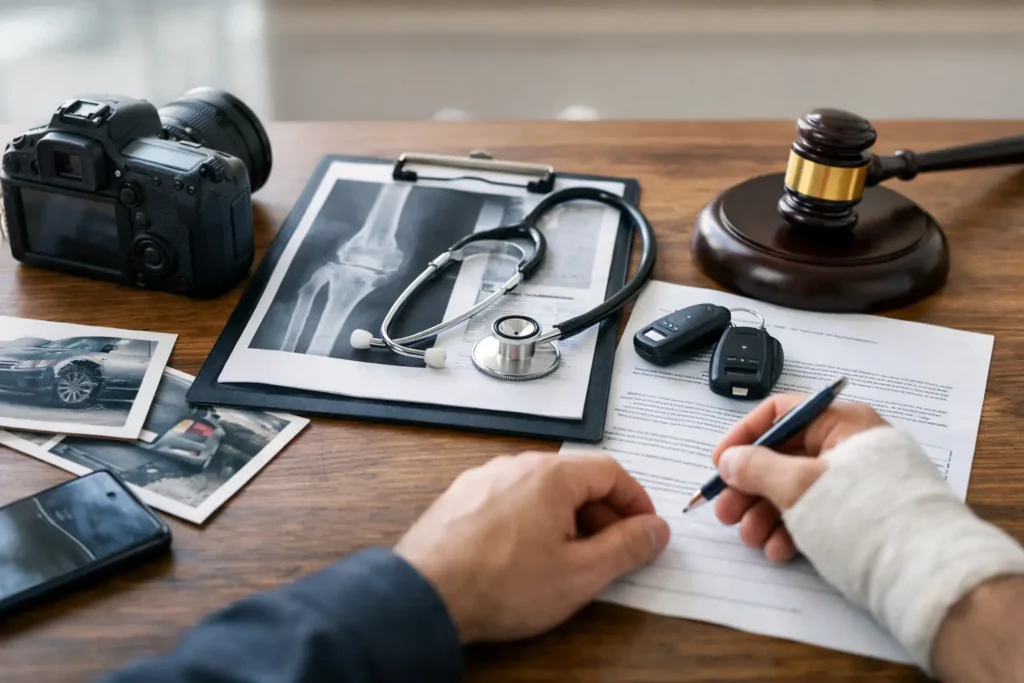
A compensation claim can turn on what was recorded in the hours and days after an accident. A clear photograph of a broken paving slab, a GP note describing your symptoms, or a witness who saw what happened may carry far more weight than a disputed account given months later. The best evidence for an injury claim is evidence that shows not only that you were hurt, but why another person or organisation was responsible and how the injury has affected your life.
For people dealing with pain, time off work and financial pressure, gathering evidence can feel like one more burden. Taking sensible steps early can protect your position and give your solicitor the strongest foundation for pursuing the compensation you deserve.
What must evidence prove in an injury claim?
Most personal injury claims in England depend on three connected issues: liability, causation and loss. Liability means showing that somebody owed you a duty of care and failed to meet it. Causation means establishing that this failure caused, or materially contributed to, your injury. Loss covers the pain, practical disruption and financial consequences that followed.
The evidence needed will depend on the circumstances. A road traffic collision, an accident at work and a fall in a supermarket are all assessed differently. However, the most persuasive cases usually combine independent records with reliable first-hand evidence. One item rarely proves everything on its own.
For example, footage may show a driver pulling out without looking, while hospital notes confirm the injury and wage slips show lost earnings. Together, those records tell a coherent and difficult-to-dispute story.
The best evidence for an injury claim
Medical records and independent medical evidence
Medical evidence is central because it connects the incident to the injury and assesses its likely consequences. Seek medical attention promptly where you need it. This is first and foremost about your health, but contemporaneous clinical notes can record your symptoms, diagnosis, treatment and what you said caused the injury.
Keep appointment letters, prescriptions, physiotherapy plans, discharge summaries and details of any treatment you pay for. Do not worry if the full medical picture is not immediately clear. Some injuries, particularly soft-tissue injuries, psychological symptoms and conditions involving chronic pain, can develop or become clearer over time.
In most claims, an independent medical expert will later examine you and prepare a report. The expert’s duty is to the court, not to either party. Their opinion may address diagnosis, prognosis, treatment needs and whether the accident caused the symptoms complained of. Your solicitor can obtain the appropriate evidence and ensure the expert is given accurate medical records.
Photographs, video and accident-scene evidence
Photographs are most useful when they are taken as soon as possible and preserve details that may soon disappear. For a pavement fall, photograph the defect from several angles and include something to show scale where it is safe to do so. For a workplace accident, photograph faulty equipment, spillages, missing guards, poor lighting or the area where the incident occurred.
After a road traffic collision, take images of vehicle positions, damage, road markings, weather conditions and registration plates if you can do so safely. Dashcam footage and CCTV can be particularly valuable, but it may be deleted quickly. Tell your solicitor about its existence without delay so that steps can be taken to request its preservation.
Photos of visible injuries can also support the medical record. Take them regularly, date them where possible and avoid filters or edits. They may demonstrate bruising, scarring, swelling or the progression of an injury in a way that a later description cannot.
Witness accounts that are clear and independent
An independent witness can be highly persuasive, especially where the other side denies what happened. Ask anyone who saw the accident for their name, telephone number, address or email address before memories fade. A short note made close to the event may help preserve important details, such as what a driver did, how long a hazard had been present or whether warnings were missing.
Not every witness has to be neutral to be useful. A colleague, friend or family member may be able to describe how the injury has affected your work, sleep, mobility, hobbies or need for care. Their evidence may be particularly relevant when the impact of an injury is not obvious from a scan or medical report alone.
Witness evidence must be honest. Do not ask someone to exaggerate, speculate or repeat things they did not see. Credibility matters, and a measured account is often more convincing than an over-stated one.
Reports, records and formal notifications
Many accidents generate records before a claim is ever considered. These may include an employer’s accident book entry, risk assessments, training records, maintenance logs, delivery records, a police incident reference, insurance details or a report made to a local authority.
Report an accident through the proper channel as soon as reasonably possible and check that the basic facts are recorded accurately. If you are injured at work, ask for the accident to be entered in the accident book. If you fall in a shop, restaurant or public venue, request that an incident report is made. Keep a copy if one is available.
A report does not automatically prove fault. It can, however, establish the date, location and early account of events, and may lead to records showing whether the responsible party knew, or should have known, about a danger.
Financial documents and evidence of day-to-day impact
Compensation is not limited to the injury itself. You may also be able to recover reasonable financial losses caused by the accident. That requires evidence. Keep wage slips, P60s, bank statements, invoices, receipts, travel tickets and correspondence about cancelled work or reduced hours.
Useful documents can include prescription charges, parking costs for medical appointments, taxi fares where you could not drive or use public transport, treatment fees, damaged clothing and care costs. If a relative has provided unpaid help with washing, cooking, shopping or childcare, keep a simple record of the time involved.
A brief diary can make a real difference. Record pain levels, medication, sleeplessness, missed activities, difficulties at work and help you need from others. Write factual entries as events happen. A diary is not a substitute for medical evidence, but it can show the human impact behind the paperwork.
Evidence that can weaken a case
The value of evidence depends on its quality as well as its quantity. Delays in reporting an accident or seeking treatment do not automatically prevent a claim, particularly if there is a good reason. But they can give an insurer room to argue that an injury had another cause or was less serious than alleged.
Social media can also be taken out of context. A single photograph of you smiling at a family event does not mean you were uninjured, but public posts may be reviewed by the other side. Avoid discussing the claim online or posting material that could be misunderstood.
Be accurate when completing forms, speaking to insurers or discussing symptoms with medical professionals. Previous injuries and health conditions should not be hidden. They may affect the value of a claim, but an expert can distinguish between a pre-existing condition and a genuine worsening caused by the accident.
Act early, but do not rush into a settlement
There are time limits for bringing most personal injury claims, commonly three years from the date of the accident or the date you first had knowledge of a significant injury. Different rules can apply to children, protected parties, criminal injury claims and other circumstances. Early legal advice helps preserve evidence while it is still available and ensures the correct deadline is identified.
At the same time, do not feel pressured to accept an early offer before the medical prognosis is clear. Once a settlement is accepted, it will usually be final. A proper assessment should take account of recovery, future treatment, ongoing symptoms and financial losses, not simply the inconvenience of the first few weeks.
If you have been injured because another party failed in their duty of care, keep what you have, write down what you remember and seek advice promptly. Cooper Hall Solicitors can assess the evidence, obtain the records that matter and provide clear guidance on the steps needed to protect your claim.