

One hospital mistake can change everything in a matter of hours. A missed scan, delayed diagnosis, or medication error may leave patients in Blackburn facing pain, stress, and financial pressure they never expected. What many people don’t realise is that thousands of medical negligence claims are made across England every year after avoidable treatment failures.
According to the NHS Resolution Annual Report, the NHS handled billions of pounds in clinical negligence liabilities linked to patient harm and safety failures. That figure reveals a growing problem many families quietly face. If poor treatment at a hospital caused avoidable injury, you may have the right to seek compensation for hospital negligence and recover losses linked to your recovery, income and future care.
Speak with Cooper Hall Solicitors today for trusted legal advice and compassionate support.
What Counts As Hospital Negligence In Blackburn?
Hospital negligence happens when a healthcare professional fails to provide proper medical care and that failure causes avoidable harm.
Official NHS Resolution data shows that more than 13,000 to 14,000 new clinical negligence claims and incidents are reported annually across England, covering delayed diagnosis, surgical mistakes and treatment failures.
In legal terms, three things usually need to be proven:
- A duty of care existed
- There was a breach of duty
- The breach directly caused injury or suffering
Both NHS and private hospitals can face legal claims if patient safety standards fall below accepted medical practice. However, not every bad outcome means negligence occurred. A poor medical result alone is not enough. The treatment must fall below the standard expected from a competent medical professional.
Common examples include:
- Misdiagnosis
- Delayed diagnosis
- Surgical mistakes
- Medication errors
- Birth injuries
- A&E delays
- Failure to monitor patients properly
Many hospital negligence compensation claims in Blackburn cases begin after patients notice worsening symptoms that should have been prevented with proper care.
Which Blackburn Hospitals Can Compensation Claims Be Made Against?
Patients can pursue claims against several healthcare providers in Blackburn and wider Lancashire. This includes:
- Royal Blackburn Teaching Hospital
- Burnley General Teaching Hospital
- NHS GP surgeries
- Private healthcare clinics
- Specialist treatment centres
East Lancashire Hospitals NHS Trust runs both Royal Blackburn Teaching Hospital and Burnley General Teaching Hospital. Publicly available NHS complaints information reveals that East Lancashire Hospitals NHS Trust received over 1,200 formal complaints in 2024-25, some of which snowballed into legal battles and negligence probes.
Where claims are against NHS hospitals, NHS Resolution acts for the Trust through the Clinical Negligence Scheme in relation to the legal process. A lot of people making an NHS negligence claim in Blackburn are often surprised to learn that serious hospital errors can include delayed scans, medication mix-ups or communication failures between departments.
Get legal help after mistakes at Royal Blackburn Teaching Hospital.
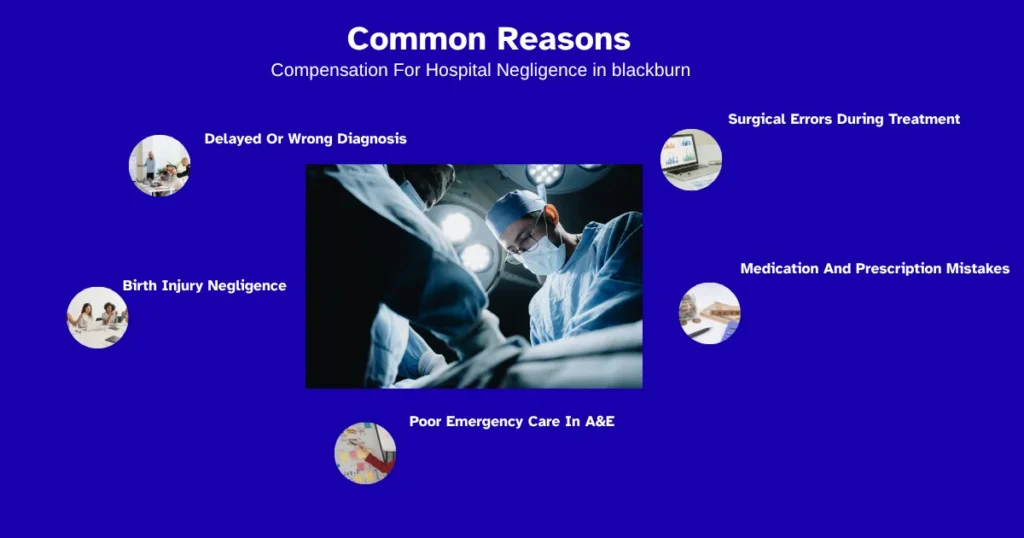
Common Reasons People Claim Compensation For Hospital Negligence
Hospital negligence can take many different forms, but most claims arise when preventable medical errors lead to patients suffering unnecessary pain, a delayed recovery or long term health problems.
Data from NHS England Patient Safety Incident Reports shows that more than 2 million patient safety incidents are reported annually across NHS healthcare settings in England.
Delayed Or Wrong Diagnosis
Delayed diagnosis cases often lead to avoidable complications. Conditions such as cancer, sepsis, or infections may worsen while patients wait for tests or specialist referrals. Many delayed diagnosis compensation and cancer misdiagnosis claim cases involve months of unnecessary suffering before the correct diagnosis appears.
Research published by Patient Safety Learning found that delayed diagnosis remains one of the leading causes of preventable patient harm in England, especially in cancer and sepsis cases.
Surgical Errors During Treatment
Surgical negligence can involve wrong-site surgery, internal injuries, retained instruments, or poor aftercare. These mistakes sometimes create lifelong complications and emotional trauma. Severe surgical negligence compensation claims may involve nerve damage, mobility loss, or permanent disability affecting work and daily life.
Medication and Prescription Mistakes
Incorrect medication doses can trigger devastating consequences. Some patients receive the wrong drugs entirely. Others experience allergic reactions because staff failed to review medical records properly. Many medical error compensation claims arise from avoidable prescribing mistakes in busy hospital wards.
According to the World Health Organization, medication errors and unsafe medication practices cause severe harm and millions of avoidable injuries globally every year.
Birth Injury Negligence
Birth injury claims can involve delayed emergency deliveries, oxygen deprivation, or maternity monitoring failures. In serious situations, babies may develop cerebral palsy or permanent neurological injuries. Families often pursue a birth injury compensation claim to help manage lifetime care needs and rehabilitation support.
The National Audit Office reported that maternity negligence and severe birth injury claims account for some of the largest NHS compensation payouts due to lifelong care requirements.
Poor Emergency Care In A&E
A&E negligence cases frequently involve overcrowding, delayed scans, or failure to identify urgent symptoms quickly. Some patients suffer strokes, brain injuries, or worsening infections after long waiting times. These hospital treatment negligence cases can dramatically affect future quality of life.
What Should You Do After Hospital Negligence?
Taking the right steps early can protect both your health and your legal position. Evidence becomes harder to collect as time passes.
- Step 1: Get Medical Help Immediately. Your health comes first. Seek urgent treatment from another doctor or hospital if your condition worsens.
- Step 2: Request Medical Records. Ask for copies of your medical notes, scans, prescriptions and appointment history. These documents often become key evidence in a clinical negligence compensation claim.
- Step 3: Take Photos And Keep Notes. Photographs of injuries, medication labels, or surgical wounds may help later. Keep a diary explaining symptoms, pain levels and emotional distress.
- Step 4: Keep Receipts And Financial Evidence. Save proof of travel costs, lost earnings, rehabilitation expenses and specialist treatment payments linked to your injury.
- Step 5: Avoid Discussing The Claim Publicly Online. Social media posts can sometimes be used as evidence by the other side during a compensation claim. Even harmless updates may weaken parts of your case unexpectedly.
- Step 6: Speak With A Medical Negligence Solicitor. An experienced Blackburn medical negligence solicitor can review medical records, arrange expert medical evidence, and assess whether negligence likely occurred.
How Much Compensation Can You Claim?
How much compensation you get will depend on how bad the negligence was and how it has affected your life, financially, physically and emotionally. Damages are typically awarded based on medical evidence, future care needs and Judicial College Guidelines with inflation and CPI adjustments in 2026.
General Damages
General damages are awarded for pain and suffering, emotional distress and diminished quality of life. The awards also consider the long-term impact of physical injury, psychological trauma and loss of independence arising from negligent treatment.
Special Damages
Special damages are damages for financial losses, such as lost income, travel expenses, rehabilitation costs, home adaptations, care packages and treatment costs for the future. Serious health care compensation claims can include the cost of lifetime care and ongoing therapy support.
2026 Compensation Examples
The amount of the compensation depends on the severity of the injury, financial losses and the long term effect on your daily life.
Courts in England often assess claims using the Judicial College Guidelines alongside medical evidence and future care costs.
| Type of Negligence | Typical Range (2026) |
| Minor injury with recovery | £1,000 to £5,000 |
| Moderate injury | £10,000 to £50,000 |
| Serious misdiagnosis | £50,000 to £200,000+ |
| Severe birth injury | £100,000 to £1 million+ |
| Fatal negligence claim | £15,120 + dependency losses |
Brain injury compensation claims, spinal injury compensation claims or permanent disability claims often settle for much higher amounts due to future care needs, rehabilitation costs and loss of earnings.
Time Limits For Claiming Compensation
Most hospital negligence claims in England follow a three-year limitation period. This usually begins either from the date negligence occurred or from the date you became aware the injury was linked to negligent treatment.
Many people only realise negligence occurred months later, after receiving another medical opinion. This is known as the “date of knowledge” rule.
Important exceptions include:
- Children can usually claim until age 21
- Mental capacity cases may have no strict time limit
- Fatal negligence claims often commence at the time of death or a finding by the coroner
Starting a negligent medical care claim early allows solicitors more time to gather witness statements, medical records and independent expert reports before evidence goes missing.
NHS Complaint Vs Compensation Claim
Many patients first use the NHS complaints process after poor treatment. Complaints allow hospitals to investigate concerns internally and sometimes issue apologies or procedural explanations.
However, complaints and compensation claims are very different.
An NHS complaint:
- Investigates service problems
- Reviews hospital procedures
- May involve the Parliamentary and Health Service Ombudsman
A legal claim:
- Focuses on financial recovery
- Requires proof of negligence
- Can result in a compensation payout
The Parliamentary and Health Service Ombudsman (PHSO) can look into complaints about NHS care and make recommendations about putting things right, including financial payments for distress or inconvenience. But it does not pay the full legal compensation which can be claimed via a clinical negligence court case. This is often surprising for patients who make an NHS legal claim after receiving an inadequate response from the hospital’s complaints process.
Even if the hospital has investigated your complaint internally, you can still pursue a legal step.
Why Some Hospital Negligence Claims Do Not Succeed
Not every claim succeeds. Honest legal advice matters because some situations simply do not meet negligence thresholds.
Common reasons claims fail include:
- Lack of expert medical evidence
- No proof that negligence caused additional harm
- Delays in starting legal action
- Conflicting medical opinions
- Minor errors without lasting injury
For example, a patient may experience a disappointing outcome despite doctors following accepted treatment standards correctly. In those situations, courts may reject the claim even when complications occurred.
An experienced hospital negligence lawyer in Blackburn will usually review claim eligibility carefully before starting formal legal proceedings.

Why Choose A Blackburn Hospital Negligence Solicitor?
Selecting a local solicitor can often make the legal process easier and more personal. A Blackburn clinical negligence solicitor knows regional NHS Trust procedures, local medical systems and the challenges faced by patients across Lancashire.
The advantages of using local solicitors are:
- Face-to-face meetings in Blackburn town centre
- Faster communication
- Knowledge of Royal Blackburn Hospital negligence claims
- Understanding of local healthcare structures
- Simpler access to medical records and expert evidence
Always check your solicitor is regulated by the Solicitors Regulation Authority and ideally affiliated with respected organisations such as AvMA. Good legal representation can assist with case preparation, settlement negotiations and evaluation of damages.
The sooner you speak to a solicitor, the better to understand if you have a strong claim.
Speak With Cooper Hall Solicitors About Your Claim
Medical negligence can leave families with long-term physical, emotional and financial strain. You may not recognize what is next. Makes total sense. What matters is getting good advice from people who know what they’re doing and how these claims work.”
Cooper Hall Solicitors provides honest case assessments, practical support and caring legal advice to clients throughout Blackburn and Lancashire throughout the claims process. If you’ve had a delayed diagnosis, surgical errors, or poor treatment at the hospital, their team can clearly explain your legal options and help you pursue compensation for hospital negligence with confidence.
Get honest advice about your hospital negligence claim before delays damage your case.