

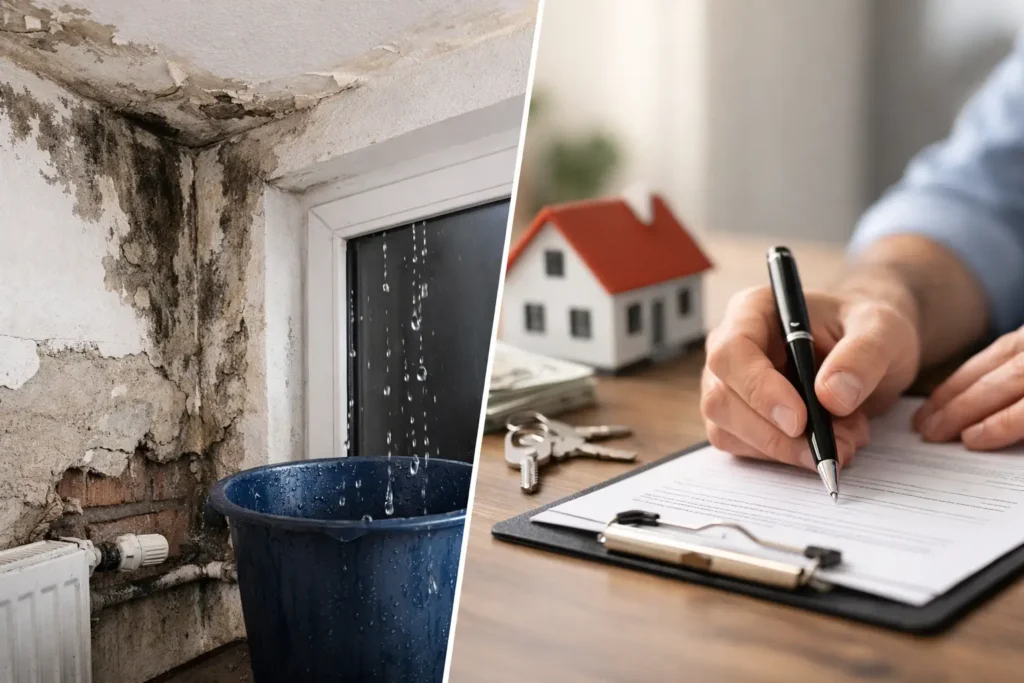
If you are living with damp walls, mould spreading across ceilings, a leaking roof or heating that fails when you need it most, this is more than an inconvenience. A housing disrepair compensation claim can be a way to make a landlord carry out essential repairs and recognise the harm those conditions have caused. For many tenants, the real problem is not just the disrepair itself, but months of being ignored, passed around or told to wait.
When a rented home becomes unsafe or unfit to live in, tenants have legal rights. Those rights are not limited to asking politely for repairs. In the right case, they can include compensation for the effect the disrepair has had on your health, your belongings, your comfort and your day-to-day life.
What counts as housing disrepair?
Housing disrepair is usually damage or deterioration in a property that your landlord is responsible for putting right. That often includes structural issues, problems with the roof, walls, windows, drains, pipes, heating, hot water and sanitation. It can also cover hazards that develop because repairs have not been done properly or on time, such as serious mould caused by penetrating damp.
Not every problem in a rented home will support a legal claim. Some issues fall within the tenant’s responsibility, particularly where damage has been caused deliberately or through misuse. There can also be arguments about whether condensation is due to the condition of the property or how it is being used. That is one reason why early legal advice matters. Landlords and housing providers often try to present clear disrepair as a lifestyle issue when the true cause is defective ventilation, leaks or poor insulation.
The key question is usually this: was the landlord responsible for the repair, and did they fail to act within a reasonable time after being told about it?
When a housing disrepair compensation claim may be possible
A housing disrepair compensation claim is usually based on more than the existence of a repair problem. You generally need to show that the landlord knew, or should have known, about the issue and did not deal with it properly. That notice can be given in writing, by email, through a repairs portal, by text message or, in some cases, through repeated reports to the housing office.
Compensation may be available where disrepair has caused loss, damage or avoidable distress. That might include damage to clothes, furniture or bedding. It may also include illness made worse by damp and mould, increased heating costs because windows or boilers were defective, or the simple loss of enjoyment of your home when rooms became unusable.
The amount depends on the facts. A minor repair delay is different from living for months with dangerous electrics, a collapsed ceiling or black mould in a child’s bedroom. Strong evidence makes a real difference, not just to the value of a claim but also to how seriously a landlord takes it from the outset.
The repairs landlords are usually responsible for
In many tenancies, landlords are legally required to keep the structure and exterior of the property in repair, along with key installations for water, gas, electricity, sanitation, space heating and hot water. Social landlords, housing associations and councils also have wider duties in relation to habitability and safety.
That can cover a broad range of problems, including leaking roofs, unsafe stairs, rotten window frames, broken boilers, faulty wiring, burst pipes, blocked drains and persistent damp linked to defects in the building. Pest issues may also form part of a disrepair case if they are caused by structural gaps, damp or waste problems outside the tenant’s control.
There are cases where responsibility is shared or disputed. For example, if access was refused for inspections or the landlord can show a repair was delayed because of tenant damage, the claim may become more complex. Complexity does not mean you do not have a case, but it does mean the evidence needs to be organised carefully.
Evidence that can strengthen your claim
Good claims are built on records. If you are considering legal action, keep a timeline of when the problem started, when you reported it, who you spoke to and what happened next. Save copies of letters, emails and screenshots of repair requests. If a contractor attended and no meaningful work was carried out, note that too.
Photographs are often important, especially where the condition has changed over time. Take clear images of mould growth, water damage, cracks, damaged plaster, faulty fittings and any ruined belongings. If the disrepair has affected your health, medical records can also help show the impact. This may be especially relevant where children, elderly relatives or anyone with asthma or respiratory conditions has been affected.
Receipts and bank statements may support claims for financial loss. If you replaced damaged items, paid for temporary heaters, washed clothes repeatedly because of damp odour or had to spend money dealing with the consequences of leaks, keep proof where you can. You do not need a perfect file from day one, but the more detail you keep, the harder it is for a landlord to minimise the problem.
What compensation can cover
Compensation in housing disrepair cases is not only about one figure for inconvenience. It can reflect several types of loss, depending on the evidence available.
A tenant may recover damages for discomfort, distress and loss of amenity. In simple terms, that means the reduced enjoyment of the home because part of it was unsafe, unpleasant or unusable. If you had to sleep in the lounge because the bedroom was affected by mould, or if your kitchen could not be used because of leaks, that matters.
There may also be a claim for damaged belongings, additional expenses and, in some cases, personal injury if the disrepair caused or worsened illness. Some claims focus heavily on getting works completed quickly, while others involve substantial compensation because the failures continued for a long period. It depends on the severity, duration and effect of the problem.
What to expect from the legal process
Most tenants want the same thing at the start: repairs done properly and without further delay. A legal claim often begins by setting out the disrepair, the landlord’s responsibilities and the remedy required. That may include inspection, urgent works and compensation.
In many cases, the property will need to be assessed by an independent expert who can identify the defects, explain the likely cause and recommend remedial works. That report can be central to the case. It shifts the discussion away from excuses and towards evidence.
Some claims settle through negotiation once the landlord understands the case is being pursued seriously. Others require court proceedings. Court is not always the likely end point, but it remains an important option where a landlord continues to delay, deny responsibility or offer too little. What matters is having a clear strategy from the start.
Why timing matters
Tenants often put up with poor conditions for too long because they are worried about making matters worse. Some fear retaliation. Others assume nothing will change. But delay can make the disrepair more serious, harder to live with and, in some cases, harder to evidence clearly.
There are also legal time limits that may affect part or all of a claim. The longer a case is left, the greater the risk that records are lost, belongings are replaced without proof, or the history becomes harder to reconstruct. Early advice can help you protect your position even if you are not ready to issue proceedings straight away.
Getting clear advice on a housing disrepair compensation claim
A housing disrepair compensation claim is not about being difficult. It is about protecting your right to live in a safe, habitable home and holding a landlord to their legal obligations. When disrepair starts affecting your health, your children, your finances or your dignity, legal action may be the most effective way to regain control.
At Cooper Hall Solicitors, we understand that tenants usually come for help after months of frustration. They want straightforward advice, decisive action and a legal team that will not let the matter drift. If your landlord has failed to deal with serious disrepair, the right next step is to get advice based on your tenancy, your evidence and the real impact the problem has had on your life.
No tenant should be left living with conditions that are unsafe, unhealthy or plainly unfair when practical legal remedies are available.