

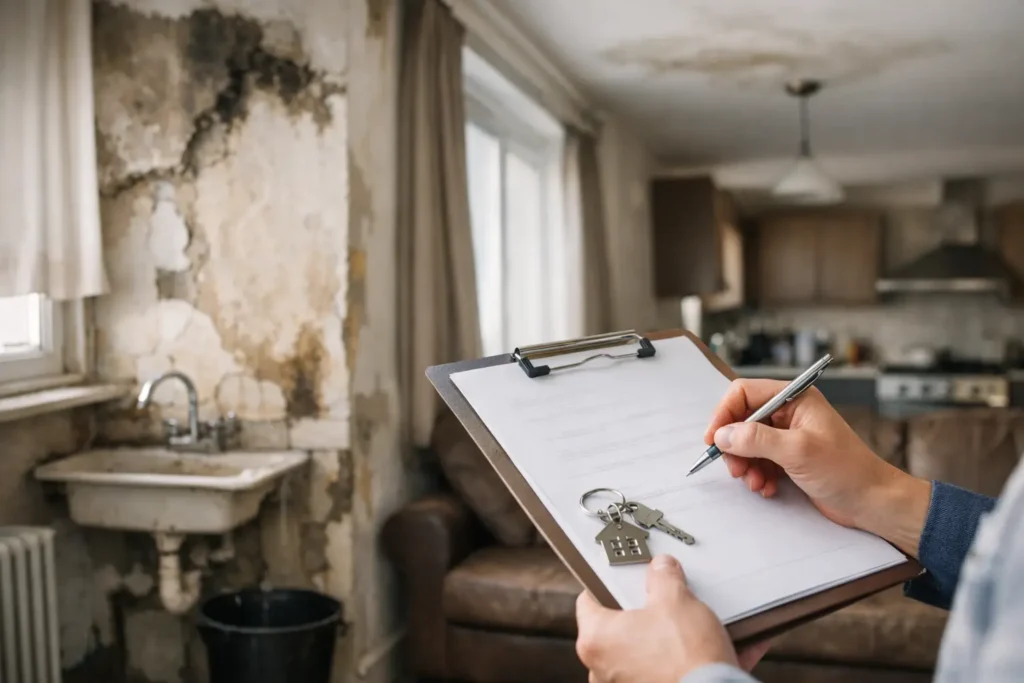
Housing disrepair is more than an inconvenience when it leaves your home damp, cold, unsafe or unfit to live in. A leaking roof, persistent mould, faulty boiler or dangerous wiring can affect your health, your children’s wellbeing and your ability to feel secure at home. If your landlord has been told about a problem and fails to take appropriate action, you may have legal options.
For tenants, the immediate priority is often getting repairs completed. However, clear evidence and early legal advice can also protect your position if the landlord denies responsibility, delays work or tries to blame you for the condition of the property.
What counts as housing disrepair?
Housing disrepair generally means a rented property has defects that the landlord is responsible for repairing but has failed to address within a reasonable time. The issue may affect the structure of the building, essential services or conditions inside the home.
Common examples include penetrating damp, mould caused by leaks or poor ventilation, broken heating or hot water systems, damaged windows and doors, faulty drains, roof leaks, unsafe stairs, defective electrics and pest infestations linked to disrepair. Problems with communal areas, such as shared entrances, stairwells or bin stores, can also matter where a landlord or housing association is responsible for them.
Not every defect creates the same legal claim. A minor cosmetic issue will be treated differently from severe mould in a child’s bedroom or a boiler failure during winter. The key questions are how serious the condition is, who is responsible for it, when the landlord became aware of it and how long they have taken to respond.
Your landlord’s repair obligations
Most landlords have legal duties to keep the structure and exterior of a rented home in repair. This commonly includes walls, roofs, windows, drains, gutters and external pipes. They are also usually responsible for installations supplying water, gas, electricity, sanitation, heating and hot water.
The property must also be fit for human habitation at the beginning of the tenancy and remain so throughout it. A home may be unfit where conditions present a serious risk to health or safety, including significant damp and mould, excessive cold, fire hazards, unsafe electrics or structural instability.
Responsibility can depend on the tenancy agreement and the cause of the damage. For example, if a tenant has deliberately damaged a door or failed to use the property in a tenant-like manner, the landlord may not be liable for that particular repair. Equally, a landlord cannot simply label mould as a “lifestyle issue” where there is evidence of leaks, inadequate heating, defective insulation or ventilation problems that require repair.
A landlord normally needs to know about a problem before they can be held responsible for failing to put it right. This is why reporting disrepair promptly, and keeping a record, is so important. Some duties concerning common parts or recurring defects may arise even where notice is disputed, but tenants should never rely on a verbal report alone.
Reasonable time depends on the risk
There is no single deadline for every repair. A gas leak, exposed live wiring, loss of heating in cold weather or a serious water leak requires urgent action. Less immediate repairs may reasonably take longer, particularly where specialist parts or substantial works are needed.
That does not permit a landlord to leave you in unsafe conditions indefinitely. They should inspect the issue, communicate clearly, arrange necessary works and take practical steps to reduce risk while a permanent repair is organised. Repeated cancelled appointments and vague assurances are not an acceptable substitute for action.
How to report housing disrepair properly
Report the problem in writing as soon as possible. Email is useful because it creates a dated record, but a text message, online repair form or letter may also help. Explain what is wrong, where it is located, when it started and how it is affecting your household. Ask for an inspection and confirmation of when repairs will be carried out.
Take photographs and videos before any work starts. For damp and mould, record the affected rooms over time rather than taking one image only. Photograph damaged possessions, standing water, cracked plaster or any visible signs that the condition is worsening. Keep copies of all correspondence, repair reference numbers, appointment notices and records of missed visits.
Where the disrepair has affected your health, speak to your GP or another appropriate healthcare professional. Keep evidence of appointments, prescribed medication and any advice given. This may be relevant if the condition has caused or worsened breathing difficulties, skin complaints, anxiety or another illness.
You should also keep a simple diary. Note dates when you reported the issue, any access you provided, the names of contractors, what work was attempted and whether the problem returned. A well-kept record often makes the difference where a landlord later claims that it was never informed or that repairs were completed.
What not to do when repairs are delayed
It can be tempting to stop paying rent until the landlord acts. In most cases, this is risky. Rent arrears can place your tenancy at risk even where there are genuine and serious repair concerns. Do not withhold rent or deduct the cost of repairs from rent without obtaining tailored legal advice first.
You should also continue allowing reasonable access for inspections and repairs. If appointments are unsuitable, respond promptly with alternative dates and keep evidence of your communication. A landlord may rely on alleged lack of access to explain delays, so it is helpful to show that you have cooperated throughout.
If the property is unsafe, do not wait for the situation to become a crisis. Contact the landlord in writing and seek advice promptly. In an emergency, such as a suspected gas leak, immediate safety steps should come first.
When the council or a solicitor can help
If a landlord is ignoring serious hazards, the local authority’s environmental health team may be able to inspect the property. Councils can assess hazards and, where appropriate, take enforcement action against landlords. This can be particularly valuable where there is a serious risk from damp, mould, unsafe electrics, excess cold or structural defects.
A complaint route may also be available for social housing tenants. However, a complaint process does not always secure urgent repairs or compensate you for the impact of prolonged disrepair. Where a landlord disputes liability, fails to act after notice or offers an inadequate response, legal advice can clarify the strongest next step.
A housing solicitor can assess the tenancy, the repair history and the evidence available. They can contact the landlord formally, seek disclosure of repair records and obtain an independent surveyor’s opinion where necessary. In some cases, a formal letter before action is enough to prompt meaningful progress. In others, court proceedings may be needed to secure repairs and pursue compensation.
What can a housing disrepair claim achieve?
The purpose of a claim is not simply to obtain a payment. It can be used to press for the works needed to make the property safe and habitable. Depending on the facts, a court may order a landlord to carry out repairs and award compensation for the period you have lived with the disrepair.
Compensation may reflect the loss of use and enjoyment of your home. For instance, the value of a claim may be affected if a bedroom, bathroom or kitchen could not be properly used, or if damp and mould spread through several rooms. You may also be able to claim for damaged belongings, additional heating or electricity costs, and health problems caused by the disrepair where the evidence supports it.
The likely outcome depends on the severity and duration of the defects, the landlord’s knowledge, the steps taken after notification and the evidence connecting any financial loss or injury to the conditions. A prompt repair does not always remove a claim for the period you were left living with the problem, but it may affect the value of any compensation.
Act before evidence disappears
Landlords sometimes carry out repairs once legal action is raised. That can be positive, but do not assume the earlier disrepair no longer matters. Preserve your photographs, messages, medical records and receipts before conditions are altered. If a contractor identifies the cause of a defect, ask for written confirmation where possible.
There are time limits for bringing legal claims, and those limits can differ depending on whether you are claiming for disrepair, damaged belongings or personal injury. Seeking advice early gives you the best opportunity to understand your rights and build a clear case.
No tenant should have to choose between keeping a roof over their head and living in safe conditions. If repairs have been ignored, Cooper Hall Solicitors can help you understand the evidence, protect your rights and take decisive steps towards a safer home.